Ivan Reyes-Amezcua

PhD in Computer Science and AI/ML Engineer with 6+ years of experience building and deploying machine learning systems, conversational AI, and scalable MLOps/LLMOps pipelines. I obtained my PhD from the Center for Research and Advanced Studies (CINVESTAV), where I researched the robustness and security of deep learning models with a focus on medical imaging, under the supervision of Dr. Andres Mendez-Vazquez and Dr. Gilberto Ochoa-Ruiz at the CV INSIDE Lab.

Currently, I work as an AI Specialist at Layer7, leading the design and deployment of enterprise LLM and multi-agent architectures for conversational AI, speech pipelines, and scalable MLOps workflows. I also serve as Lead AI/ML Instructor at AnyoneAI and teach machine learning, deep learning, and data science at graduate and undergraduate levels at ITESO, ITESM, and UMG.

I actively contribute to the research community as MLflow Ambassador at Databricks, Mentorship Chair at the LatinX in Computer Vision Workshop at CVPR, and as a mentor in the Google ExploreCSR Program LATAM.

Email  /  Scholar  /  LinkedIn  /  Twitter  /  Github

Research

I'm interested in computer vision, deep learning, generative AI, and robust machine learning. My research focuses on building models that can better understand and generalize across real-world scenarios, particularly in medical imaging. I work on improving model robustness against adversarial and natural corruptions, and developing federated learning techniques for privacy-aware and scalable AI.

Enhancing Image Classification Robustness through Adversarial Sampling with Delta Data Augmentation (DDA)
Ivan Reyes-Amezcua, Gilberto Ochoa-Ruiz, Andres Mendez-Vazquez
CVPR - LatinX in AI Workshop, 2024   (Oral Presentation)

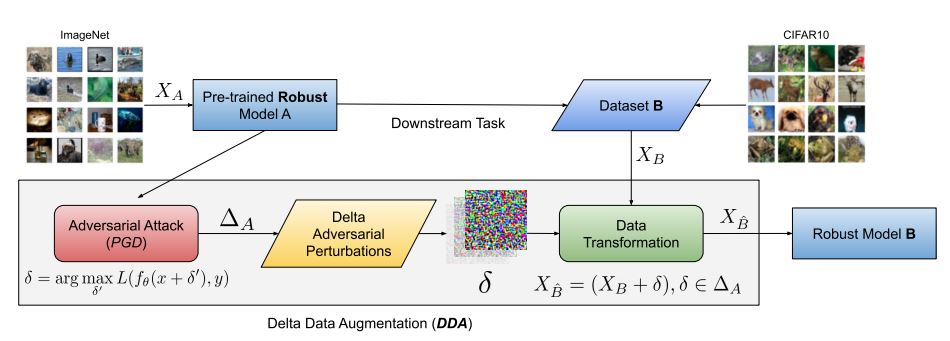
A novel technique that boosts adversarial robustness by injecting perturbations from robust models into new tasks. Unlike traditional attacks, DDA enriches training with diverse, transferable adversarial signals, improving defenses across multiple datasets.

EndoDepth: A Benchmark for Assessing Robustness in Endoscopic Depth Prediction
Ivan Reyes-Amezcua, Ricardo Espinosa, Christian Daul, Gilberto Ochoa-Ruiz, Andres Mendez-Vazquez
MICCAI - Data Engineering in Medical Imaging (DEMI) Workshop, 2024   (Oral Presentation)
Arxiv / Code / Dataset

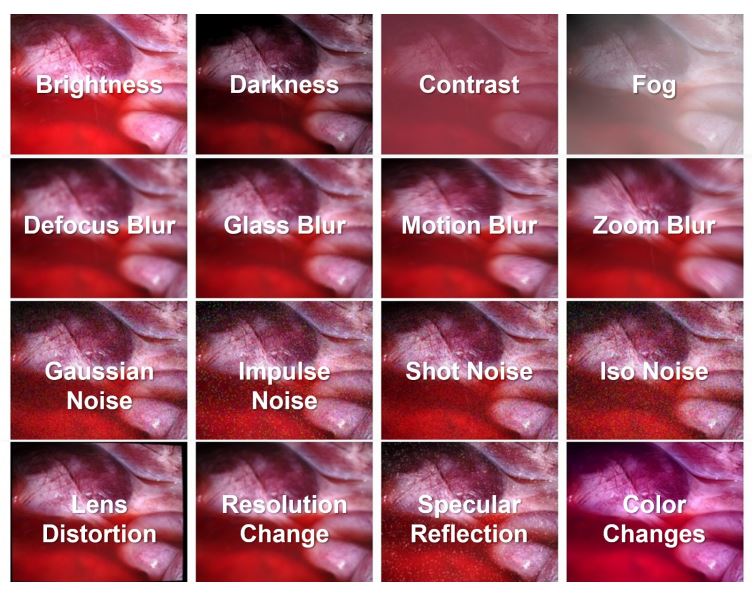
A benchmark for evaluating the robustness of monocular depth estimation models in endoscopic scenarios, featuring real-world image corruptions. Alongside it, we propose a new metric, mDERS, and release SCARED-C, a dataset tailored to assess performance under challenging endoscopic conditions.

Leveraging Pre-trained Models for Robust Federated Learning for Kidney Stone Type Recognition
Ivan Reyes-Amezcua, Michael Rojas-Ruiz, Gilberto Ochoa-Ruiz, Andres Mendez-Vazquez, Christian Daul
MICAI, 2024   (Oral Presentation, Best Student Paper Award)
Arxiv

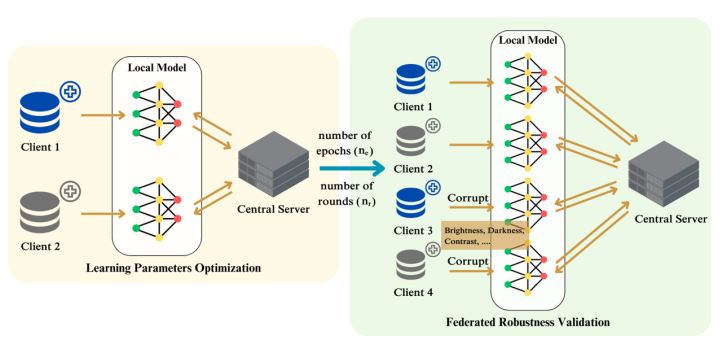
A robust Federated Learning framework that leverages pre-trained models to improve kidney stone diagnosis while preserving data privacy. Our two-stage method—Learning Parameter Optimization and Federated Robustness Validation—boosts both accuracy and resilience to image corruptions across decentralized datasets.

MACFE: A Meta-learning and Causality Based Feature Engineering Framework
Ivan Reyes-Amezcua, Daniel Flores-Araiza, Gilberto Ochoa-Ruiz, Andres Mendez-Vazquez, Eduardo Rodriguez-Tello
MICAI, 2022   (Oral Presentation)
Arxiv / Code

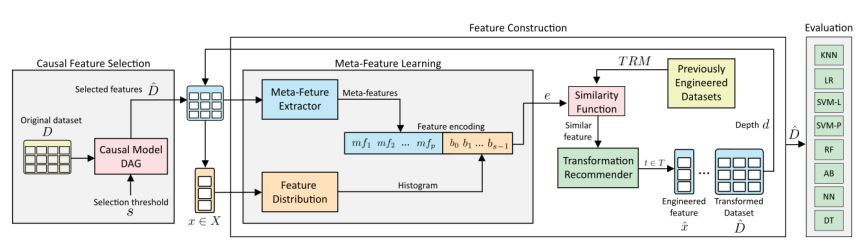
A novel feature engineering method that combines meta-learning and causal analysis to automate the search for high-impact feature transformations. By encoding feature distributions and selecting causally relevant inputs, MACFE significantly improves prediction performance.

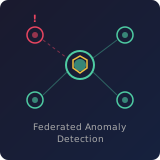
Robust Federated Anomaly Detection Using Dual-Signal Autoencoders: Application to Kidney Stone Identification in Ureteroscopy
Ivan Reyes-Amezcua, Francisco Lopez-Tiro, Clement Larose, Christian Daul, Andres Mendez-Vazquez, Gilberto Ochoa-Ruiz
MICCAI - DEMI Workshop, 2025   (Best Paper Award)
Arxiv

We present FedAgain, a federated learning algorithm for medical imaging anomaly detection across decentralized networks with heterogeneous data. The system uses a dual-signal trust mechanism based on reconstruction error and model divergence to downweight suspicious client contributions while maintaining privacy, achieving precision gains of up to +14.49% and F1 score improvements of up to +10.20% over traditional FedAvg.

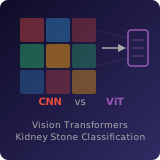
Vision Transformers for Kidney Stone Image Classification: A Comparative Study with CNNs
Ivan Reyes-Amezcua, Francisco Lopez-Tiro, Clement Larose, Andres Mendez-Vazquez, Gilberto Ochoa-Ruiz, Christian Daul
MICAI, 2025   (Best Paper Award)
Arxiv

A comparative evaluation between Vision Transformers and CNNs for kidney stone classification from endoscopic images. The ViT-base model pretrained on ImageNet-21k significantly outperformed ResNet50, achieving 95.2% accuracy on complex endoscopic patches compared to ResNet50's 64.5%, demonstrating that ViT architectures are a superior alternative for this medical imaging task.

Adversarial Robustness on Artificial Intelligence
Ivan Reyes-Amezcua, Gilberto Ochoa-Ruiz, Andres Mendez-Vazquez
Book Chapter - What AI Can Do: Strengths and Limitations of Artificial Intelligence, 2024  

This chapter explores the critical need for evaluating the robustness of deep learning models, especially in safety-sensitive applications. Focusing on adversarial attacks, we highlight the vulnerabilities of neural networks to small, targeted input changes and emphasize the importance of developing reliable techniques to ensure trustworthy AI systems.

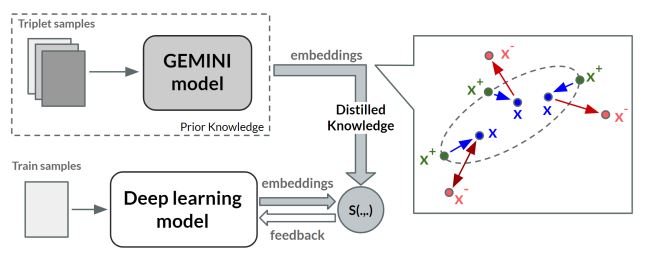
Guided Deep Metric Learning
Jorge Gonzalez-Zapata, Ivan Reyes-Amezcua, Daniel Flores-Araiza, Mauricio Mendez-Ruiz, Gilberto Ochoa-Ruiz, Andres Mendez-Vazquez
CVPR - LatinX in AI Workshop, 2022   (Best Paper Award)

A novel approach designed to improve generalization and manifold representation under distributional shifts. By combining a multi-branch master model with a student model in an offline distillation setup, our method achieves up to 40% performance gains in visual similarity tasks through more compact and robust clustering.

Experience

Artificial Intelligence Specialist — Layer7 2023 – Present
Lead design and deployment of enterprise LLM and multi-agent architectures for automated debt collection, conversational analytics, and customer engagement. Developed and optimized TTS/STT speech pipelines (300K+ requests/day). Built agentic RAG pipelines and architected full MLOps/LLMOps workflows using MLflow, DVC, Docker, and AWS.
Lead AI/ML Instructor — AnyoneAI 2024 – Present
Teaching ML, Deep Learning, NLP, and MLOps, guiding industry engineers through hands-on applied curriculum aligned with real-world pipelines. Created lesson plans focused on reproducibility, deployment, and inference optimization.
Assistant Professor / Lecturer — ITESO, ITESM, UMG 2021 – Present
Teaching Machine Learning (Master's), Deep Learning, Computer Vision, Data Science with Python, Statistics, AI, and Cloud Computing. Led coordination of the diploma program "Deployment of ML Models in Production Environments." Supervised undergraduate and graduate research projects in ML and computer vision.
Software Engineer — SlashWeb 2017 – 2019
Developed web and mobile applications using JavaScript, React Native, NodeJS, SQL, and MongoDB for client-facing products.

Education

Ph.D. in Computer Science (Deep Learning) — CINVESTAV, Mexico 2021 – 2025
Thesis: Towards Robust Deep Learning and Federated Models for Computer Vision. Research areas: Robust ML, medical imaging, federated learning, adversarial methods.
M.Sc. in Computer Science (Machine Learning) — CINVESTAV, Mexico 2019 – 2021
Thesis: Meta-Learning Based Automated Feature Engineering. Specialization: Feature Engineering, automated ML, computer vision.
B.Eng. in Cybernetics & Computer Systems Engineering — Universidad Marista de Guadalajara, Mexico 2014 – 2019

Leadership & Service

MLflow Ambassador — Databricks 2025 – 2026
Selected for contributions to MLOps education and promotion of MLflow adoption across industry, academia, and Latin American AI communities.
Mentorship Chair — LatinX in Computer Vision Workshop @ CVPR 2024 – 2025
Led organization of global mentorship programs connecting researchers and industry experts.
Mentor — Google ExploreCSR Program LATAM 2024
Reviewer & MLOps Tutorial Instructor — MICAI, COMIA 2022 – 2025
Delivered tutorials on MLOps, design patterns, robust ML, and evaluated research submissions.

Projects

Awesome MLOps End-to-End (2025)
End-to-end MLOps system for predicting trip durations in Guadalajara's MiBici bike-sharing system using MLflow, DVC, FastAPI, Docker, and automated retraining.
MACFE Framework (2022)
Meta-learning + causality automated feature engineering framework published at MICAI 2022 with reproducible open-source Python implementation.
PyCUDAcov (2020)
Highly optimized covariance matrix computation library using CUDA parallel programming, released as a PyPI package.
Machine Learning Projects Repository
Actively maintained repository featuring ML, DL, and Data Science projects aligned with state-of-the-art architectures and evaluation practices.